Lock Carbon for a Cleaner Tomorrow

Lock CO₂ Today.
Create Green Value Tomorrow.

co2.locker is building infrastructure to connect carbon measurement, storage and management—from CO₂ captured or emissions reduced to transparent data that can support carbon-credit development and the green economy.

Explore the Carbon Journey
MeasureVerifiable carbon data
StoreCarbon in biomass, soil and suitable storage solutions
Create ValueConnect projects with carbon markets
Photosynthesis and carbon storage

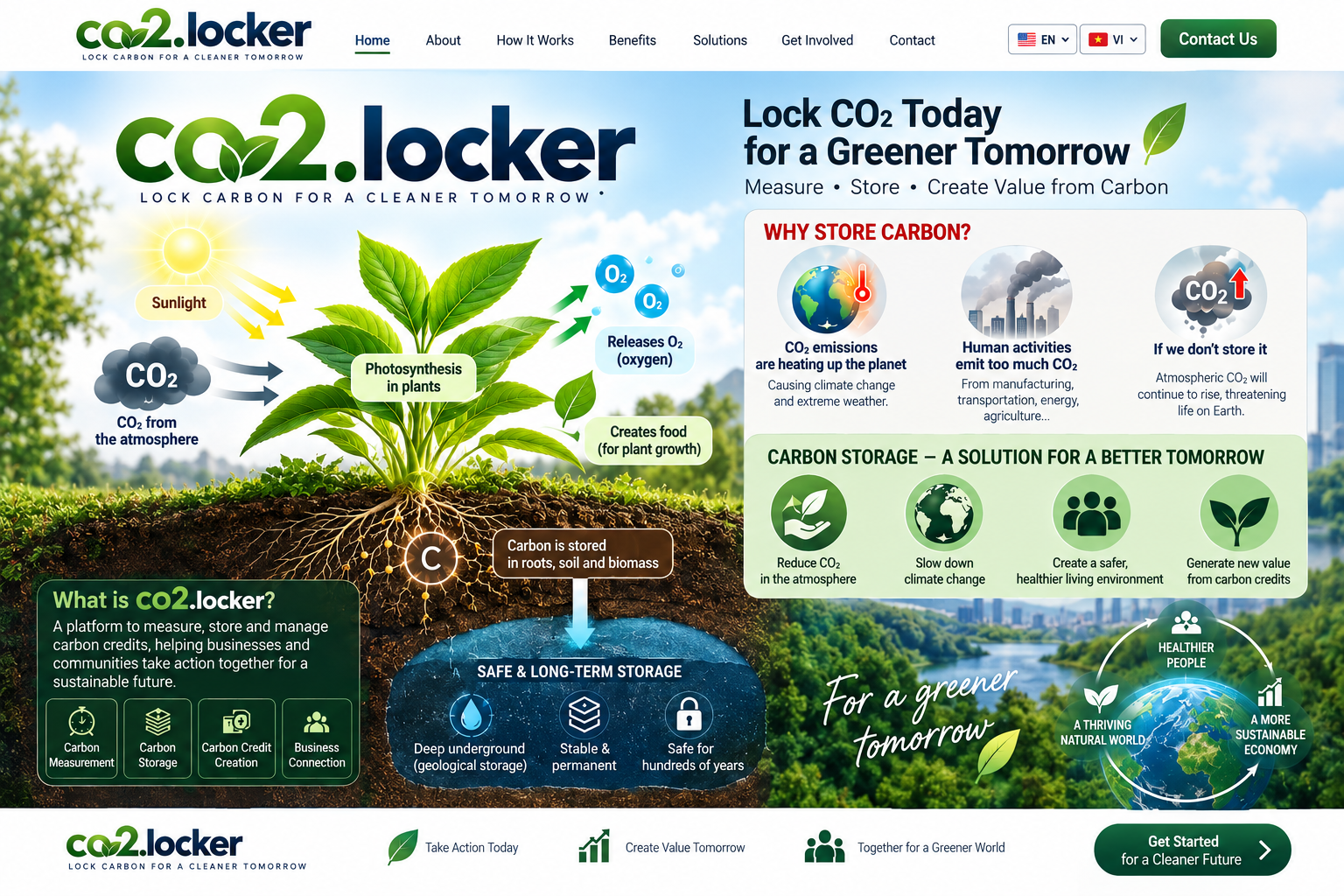
From Natural Photosynthesis to Measurable Carbon Storage

Plants absorb CO₂ from the atmosphere, use sunlight for photosynthesis, create biomass and release O₂. Part of that carbon remains stored in stems, roots and soil. When emissions exceed natural absorption capacity, cutting emissions and increasing carbon storage become important parts of the green transition.

co2.locker aims to digitize this journey with data: identify carbon sources, track reductions or removals, preserve records and support connections to appropriate verification processes.

Carbon → Data → Asset

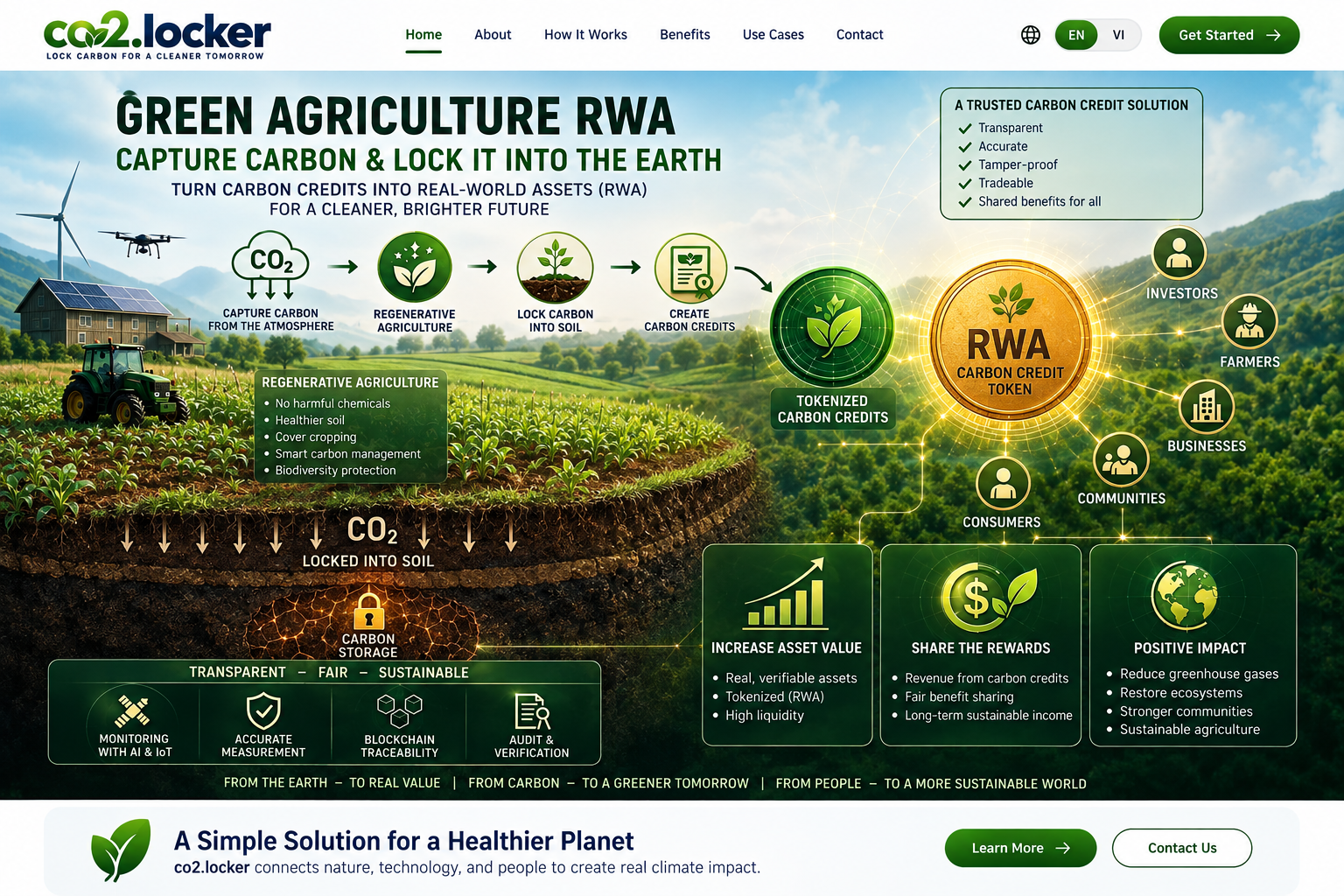
Green Agriculture RWA: Turn Real-World Impact into Data and Value

In regenerative agriculture, appropriate practices can increase carbon stored in soil and biomass. Measurement, reporting and verification data provide the foundation for demonstrating impact and, when applicable standards are met, creating carbon credits.

At the RWA layer, co2.locker can connect real-world assets and impact with transparent digital records. Issuance, trading or tokenization should occur only when a project satisfies the applicable standards, ownership requirements, verification processes and legal rules.

Green agriculture RWA and carbon credits
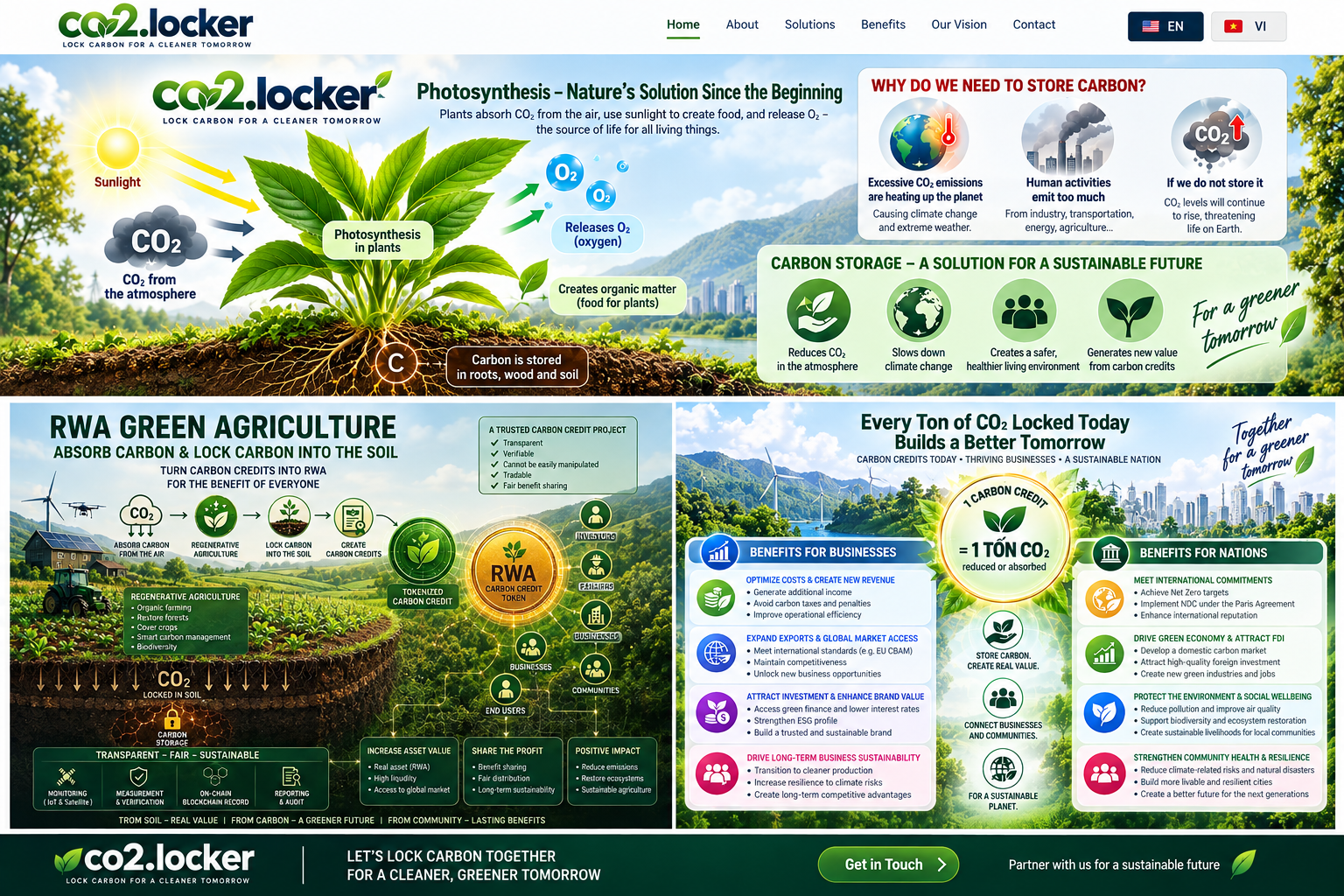
1 carbon credit ≈ 1 tonne CO₂e

One Unit of Climate Impact — Multiple Layers of Value

In carbon markets, one credit generally represents one tonne of CO₂ equivalent reduced, avoided or removed under a specific methodology and standard. Actual value depends on project quality, standards, additionality, storage durability and independent verification.

Businesses

Support emissions management, ESG data preparation, emissions-reduction projects and potential new revenue when credits qualify.

Trade

Improve readiness for carbon requirements across supply chains and export markets as emissions data becomes increasingly important in international trade.

Nations

Help mobilize capital for the green transition, develop carbon markets and support national climate goals.

Communities

High-quality projects can support livelihoods, protect ecosystems, restore soil and advance sustainable agriculture.

Carbon credit benefits
Connect with co2.locker

Start with a Project That Can Be Measured

Do you have an agriculture, forestry, renewable-energy, emissions-reduction or carbon-storage project? Send us the details to discuss data models, MRV, carbon credits and potential connections to the co2.locker ecosystem.

Note: This website presents the platform concept. Carbon credits are recognized only when the applicable methodology, standard and verification requirements are satisfied.